Yves uses a few Chinese social media platforms to keep up with her friends back home, and I often see stuff on there while she’s doing things. I don’t speak or read any Chinese whatsoever, but between what I’ve just seen visually, and what Yves & I have discussed, one thing is extremely clear to me.
Chinese platforms leverage their comments in interesting ways. For example, on Chinese equivalents of YouTube, comments are overlaid atop the video player itself, encouraging even more interactivity.
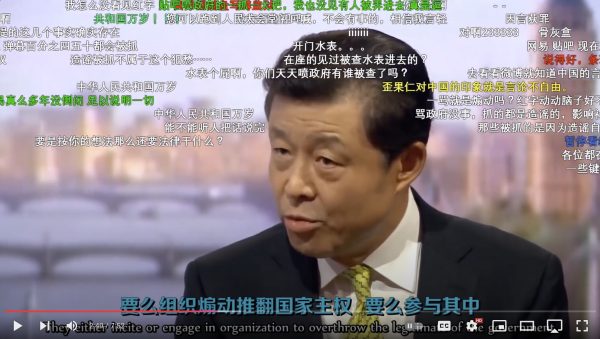
At first this sounds horribly distracting, but in a matter of minutes of seeing it in action, I loved it!
- The comments can stream by in the black areas of the video player, making them less intrusive.
- The video players seem to use some kind of content recognition to place the comments in less intrusive areas of the screen to avoid blocking relevant action.
- The commenters can add context to specific timestamps, adding useful information or reactions about specific things.
When people know that their words will be shown right atop the video (rather than buried below), they’re more likely to leave comments because they’re looking for that dopamine feedback too, the pleasure of knowing their voice is heard.
More comments, more interactivity, more dopamine for the content producer. It’s very addictive, and I can see why Yves was so disappointed in American social media sites like Instagram, Snapchat, Facebook, YouTube, etc. They just don’t provide the same dopamine hit.
I also have a hunch, but I haven’t bothered to investigate it or prove it. I think that someone – could be the platforms, could be the government, or both – is using AI bots to generate comments from people that don’t exist. The bots analyze your video & photo content, and generate relevant positive comments to make the creator feel good, plus relevant discussion-generating comments to trigger humans to interact with the creator, and with each other. (This may also be one of the reasons Chinese LLMs are doing so well.)
Platforms are motivated to do it because it’s addictive for the users.
The Chinese government is motivated to do it because it gives government censors a way to shape discussion without censoring it outright. They can make it appear that a large number of viewers feel a certain way about the content, or add “relevant context” that’s really just government propaganda disguised as user content.
Now, Meta’s getting into the business too, building AI tools that masquerade as users that create content and leave comments. The killer quote in there is the Meta exec who said, “We expect these AIs to actually, over time, exist on our platforms, kind of in the same way that accounts do.”
Set aside your feelings about the dystopian nature of this for a second. I couldn’t care less if AI bots leave comments on somebody’s food pictures, their outfit-of-the-day, or their makeup tutorial. Sure, that’s bad, and it leads to discussion on how governments shape lives, but that’s just not an interest of mine, and that’s not what we’re here for today.
I dread the idea of AI bots leaving comments on tech tutorials and documentation.
Right now, many old-school tech content creators are focused on the damage LLMs are causing to online documentation. Humans are using LLMs like ChatGPT to write blog posts and presentations. The results are cluttering up social media and search results with bad advice, outdated techniques, and code that simply don’t work. That’s bad, and Eugene Meidinger wrote a good post about that problem (or at least he says he wrote it, ha ha ho ho.)
I totally agree that it’s bad, but I also think we’ve already lost that battle. The kinds of people who do this kind of thing won’t be convinced by lectures on ethics, and there’s going to be a never-ending sea of people new to tech who want to climb the career mountain with shortcuts.
The next battle is going to take place in the comment section, which will likely move onscreen. Even good human-produced content will start to be overrun with comments – some real, some AI-generated.
This is going to represent a significant new workload for content creators. We’re going to have to be good stewards of the comment section, trying to prune out the weeds. For decades, I’ve taken the approach that everyone should be allowed to leave their opinions on my content because it leads to fun discussions, user engagement, and long-term relationships. With the advent of bot-generated onscreen content, I’m rethinking that. My concern is that if the comment volume grows dramatically on my tech content, I’m just gonna delete comments with bad advice, rather than trying to engage with the commenter.
I don’t know whether this means online tech communities will get better or worse in 2025. More engagement from real human beings is a wonderful thing. I just can’t guess whether it’s going to be worth the price that we’ll have to pay.
Update Jan 2: just to be clear, I’m not sad about this. Technology changes all the time, and we have to keep adapting. In the early days of the internet, we had no search engines, and we had to rely on manual content classification and human-updated directories. When we got Google and good search algorithms, we were excited – but then search engines were gradually manipulated by SEO fodder. When algorithms got better, we were excited – but then the paid ads business turned search engines into garbage. When LLMs came out and bypassed search engines altogether, we were excited, and society is gradually figuring out the problems with that as well. I’m genuinely excited right now because something will come out to solve the problem of humans finding their way on the internet – there’s a ton of money at stake – and I’m excited to see what’ll be next. I watch these kinds of things with enthusiasm and popcorn because there are a lot of bright people – way smarter than me – trying to solve these problems.


4 Comments. Leave new
All of my blog posts are artisanally hand crafted, I’ll have you know!
Thanks for the mention and yeah, the AI litterers won’t listen to me on this. LinkedIn is so depressing right now.
[…] Tech Content Creators Will Have a New Job This Year […]
[…] 기술 콘텐츠 제작자, 올해 새로운 작업을 맡게 되다 […]
In 30 years this neuro overstimulation is going to be like smoking – a great idea if you’re really, really into poisoning yourself.