


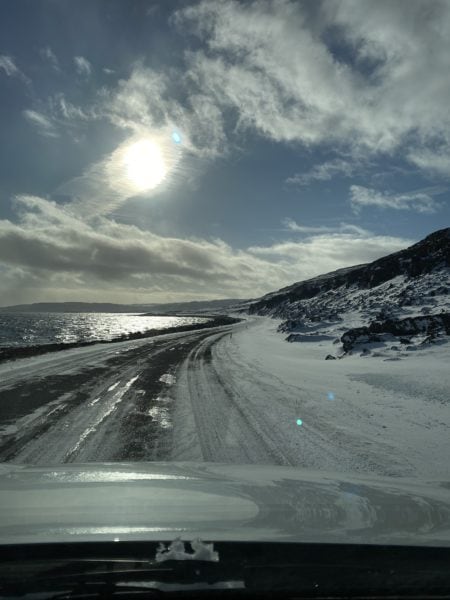
Erika and I first visited Iceland for SQL Saturday 2019, and returned again in 2020. We had such a good time and loved the place so much that we started making plans to go for longer and longer periods of time.
In mid-2020, we realized that the coronavirus situation was going to get a lot worse before it got better. I decided not to do any in-person client engagements or conferences until we could both be vaccinated, and that wasn’t going to come around quickly. There was no vaccine on the horizon, and even if one came out, we wouldn’t be the first ones eligible to get it. We’re not old enough, not vulnerable enough, and certainly not critical enough to the nation to merit getting early access.
So we thought, screw it – let’s just move to Iceland for a while in early 2021.
Why Iceland?
Iceland’s climate is interesting year round. We both love Mexico and we’d love to live down there, too, but it’s insufferably hot in the summer. Reykjavik’s average weather is way the hell colder, but it’s really interesting. Deep winter days have just 4 hours of daylight, and in the summer, the sun sets at midnight and rises again at 3AM. I don’t know if we could stand that for a decade, but we’re excited to see it for a few seasons at least. We’ve already been over there a couple of times during winter, and we loved it.
Iceland is just so gorgeous. From the Game of Thrones filming locations to the obsession with hot springs, there are so many beautiful places to see. Here’s the part we love the most, though: most of these can be seen without hiking long distances. Erika and I like seeing the sights from an SUV, with relatively short hikes.
Iceland has a reputation for being expensive, but it’s really not that bad compared to, say, San Diego. The cost of living in Reyjavik is about the same as San Diego, assuming you rent, and if you’re willing to go outside of Reykjavik, it’s much less expensive. We’re going to be living out in the countryside to enjoy the views and isolation. Erika and I are kinda weird: we both share a love for super-dense urban areas where we can walk to everything, but we also love complete isolation in the middle of nowhere – as long as we have fast Internet.
Iceland has great Internet infrastructure. Most of Iceland’s homes are connected with gigabit fiber, making it easy for me to continue to teach training classes. That sounds like an odd thing to lead with, but it really does dictate my travel. If I’m going to teach a class remotely, I need an absolutely bulletproof and fast connection, and hotel wi-fi ain’t gonna cut it. Many corporate offices can even struggle to upload a 1080p stream for hours on end. And this is really surprising because…
Iceland’s population is really, really spread out. Iceland is about the same size as Ohio, but Iceland has about 350K people compared to Ohio’s 12 million. Their population density is the lowest of any European country: just 3.56 people per square kilometer (US: 34), 9.2 per square mile (US: 87.)
Iceland’s people make smart decisions. They take advantage of their natural resources with almost all of their electricity & heat coming from the earth. 100% of their electricity is provided by geothermal and hydropower, and 85% of houses are heated with warm water from the earth. This earth-and-people-first mentality shows in how they treat their people, too: their labor laws favor the worker with things like universal healthcare and a minimum 24 weekdays of paid holiday leave per year.
I’m not saying any of this stuff to denigrate the US by any means – we still love the US. I’m just sharing this stuff with you because I think you’ll find it interesting to compare & contrast the countries.
How we’re getting permission to reside in Iceland
In normal times, US citizens can come to Iceland for tourist or business purposes for up to 90 days.
These are not normal times.
Right now, US folks aren’t allowed in, and even if they were, we’d have to leave & re-enter every 90 days. International travel adds coronavirus exposure risk, plus you have to quarantine upon entry to Iceland. We wanted a longer-term option.
For centuries, governments have approached residence permits with the mindset of, “Ah, you want to come to our country to work for a specific company here? We’ll get you set up with a residence permit to let you work for that company. If your employment ends, you’ve got X weeks to find another job, but if you don’t find one, you gotta leave the country.”
Most governments aren’t yet ready for digital nomads, people who can work from anywhere, at any time, for any company in the world. Even if you run your own company, the governments eye you suspiciously because they assume you’re trying to set up shop in their country to service their country’s companies.
Iceland’s work permit choices don’t have a long-term option for digital nomads. Japan is an interesting exception: Japanese citizens can get a working holiday visa that allows them to work for Japanese companies while they’re in Iceland. Americans, not so much.
For me, especially with tourists being denied entry, the easiest solution is to get a job in Iceland. Iceland offers a residence permit requiring expert knowledge, which means you’re doing a job with very specific, deep expertise – hey, I have that! The Iceland Directorate of Labour has a nice writeup on the kinds of experts who can get in. The application process involves a few hours of paperwork and legwork, like requesting an FBI identity check, getting fingerprinted at the post office, and wiring the application fee to Iceland.
If you’re interested in pursuing something similar, and if you’re on a short timeline, there are immigration attorneys who specialize in this kind of thing. (I’m doing it with the help of my upcoming employer – more about that in a while. I’m still going to be teaching training classes, don’t worry.)
Working as an expert offers two big advantages: Erika could be included (but not work), and after four years, we’d be eligible for permanent residence permits.
We’re starting to plan logistics
Leaving San Diego is the easy part because we don’t have a lot of ties. Erika and I have been renters for years. We built a house in Houston around a decade ago, but after we sold that, we decided to avoid home ownership for a while. We really like the flexibility and peace-of-mind that renting gives us, and for us, it’s worth the added expense over a mortgage. Our San Diego apartment lease is up around January 2021, so it makes for good timing. We’ll hire movers, put our stuff (including Helmut) into storage, and then fly over to Iceland. We’ll only bring clothes and laptops – we’re not shipping everything we own.
The first big decision is where to live. If I still wanted to travel internationally to conferences or onsite clients, then we would have to live near the capital, Reykjavik. 1/3 of Iceland’s population resides there. It’s a very pretty city, but it’s at the southeast tip of Iceland, and it’s not a great home base for adventuring around the country.
We looked at rental houses all around the countryside, and we ended up picking one in North Iceland, a beautiful, isolated area with lots of sights. We worked with the house’s owner to get gigabit fiber installed ahead of time, and she even went so far as to run bandwidth tests and send us pictures. It’ll work well for my classes, fingers crossed, and we’ve got classes scheduled out through May.
The second big decision is what to drive, and we’re car people, so we’re totally obsessing over that one. In the past, we’ve rented Toyota Land Cruisers, but renting one of those doesn’t make financial sense if you’re going to be there 6-12 months. Stay tuned for our decisions on that one – I’ll blog more about that as go-time gets closer.
Continue reading: January 2021, we made it to Iceland.